Politics & Government
West Deptford School Board to Weigh Options on Election Dates
A new state law allows the school board to move the school election from April to November.


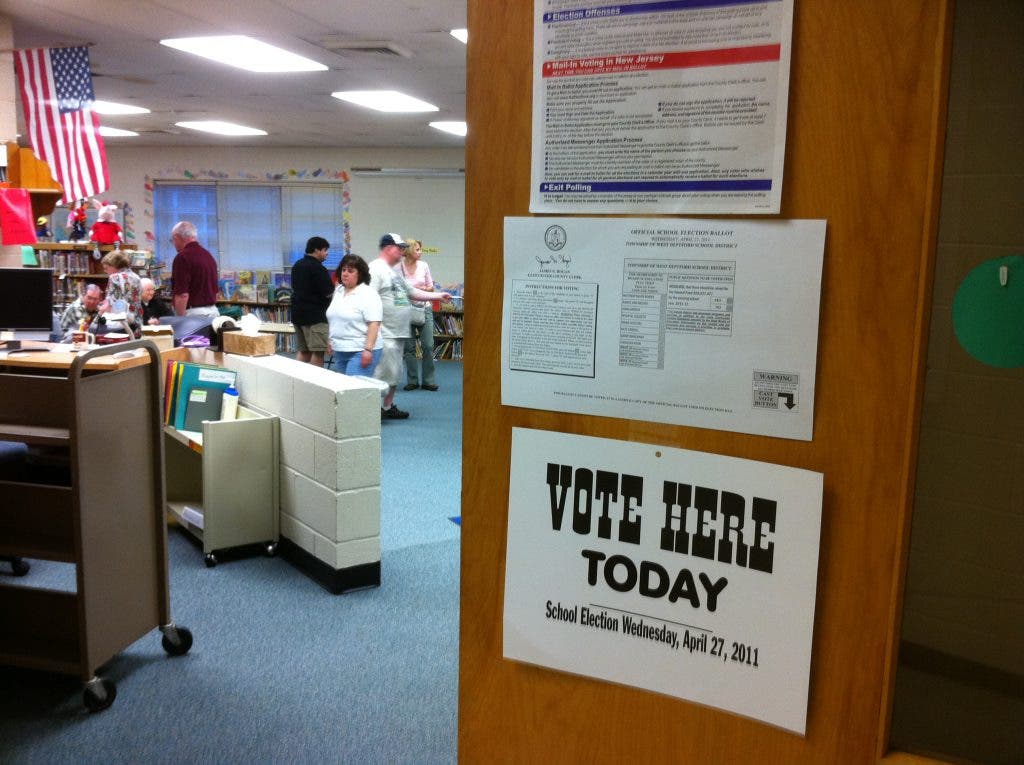
A new law giving school boards the option to shift their elections to the November general election should be at the head of the discussions at one of the next few meetings, said board President Christopher Strano.
The new law provides multiple routes to moving the elections, and also strips away the requirement for a public referendum on the school budget for districts who go to a November school board election, as long as the budget doesn't increase by more than the 2-percent cap currently in place.
While Strano said there's been a certain amount of informal talk over the potential changes, it hasn't been discussed by the full board yet.
Find out what's happening in West Deptfordwith free, real-time updates from Patch.
“We were waiting for the final word to come down,” Strano said.
Strano declined to talk about his specific views on the new law, given the potential for biasing other members of the board, but said any debate over whether to move West Deptford's elections will take place in the school board's public session. That could come as early as the next meeting, on Jan. 23.
Find out what's happening in West Deptfordwith free, real-time updates from Patch.
“This will be something that's an open discussion,” he said.
The law allows a move to a November school board election via three routes:
- By the school board passing a resolution changing the date.
- By the township committee passing a resolution changing the date.
- By a public referendum, if members of the public can bring a petition with signatures from at least 15 percent of the voters who voted in the last Presidential election.
Frank Belluscio, a spokesman for the New Jersey School Boards Association (NJSBA), said there have already been calls into the association from superintendents, school board members and business administrators across the state, looking for information about switching to the November general election.
"It's more than I would have thought," he said.
While there's no exact deadline for moving to this year's November election, districts have to get moving on the change soon, given budget deadlines looming next month, as well as the announcement for filing deadlines for school board candidates.
That announcement came on Jan. 19 last year in West Deptford, ahead of an early-March filing deadline.
Even if districts don't move to a November election this year, the option is always open, but under the law, once a district moves the school board election to November, it can't be changed back for four years.
"This leaves the decision in the hands of districts and communities to decide what's best for them,” Belluscio said. “There are many variables that differ town-to-town, and communities should be able to decide whether April or November elections work better for them."
Proponents of the move to November, like West Deptford Mayor Ray Chintall, point to the savings from consolidating elections, as well as the potential for increased voter turnout.
Despite eight people running for three open school board seats last year, , as opposed to the November election, .
Chintall said he sees the good outweighing the bad when it comes to moving the school board election to November.
“It's a good start to get more involvement by the voters,” he said.
Though the move to the general election would remove a vote on the school budget if it remains below the 2-percent cap, any budgets that go over that cap would have to be approved in a ballot referendum, as all budgets are now.
Both the NJSBA and the New Jersey Education Association (NJEA) supported that provision, noting that the budget has to go through state scrutiny already.
“Nowhere else do voters get a direct say in the budget by voting for it,” said NJEA spokesman Steve Baker. “School boards set the budget based on their individual community and school needs—that's what they're elected to do and that's what they should be doing."
Get more local news delivered straight to your inbox. Sign up for free Patch newsletters and alerts.


